Sun exposure plays a critical role in skin aging. Many people may ask, "why does sun exposure affect skin aging?" The answer lies in the complex interaction between ultraviolet (UV) rays and our skin. UV rays penetrate the skin and damage collagen and elastin fibers. This leads to wrinkles, sagging, and a loss of elasticity.
Every time we step outside without protection, we expose our skin to harmful rays. Over time, this exposure accumulates, resulting in visible signs of aging. It's easy to underestimate the impact of the sun. We might think a sunny day is harmless, but the long-term effects tell another story. Even brief encounters with sunlight can contribute to skin damage.
Moreover, many individuals overlook the need for daily sunscreen. A lack of awareness about this simple preventive measure is concerning. While some may note that a tan can seem attractive, it is crucial to understand the hidden consequences. Inadequate sun protection can accelerate aging, making it essential to adopt healthy skin habits. Understanding the science behind sun exposure can guide us toward better skincare choices.
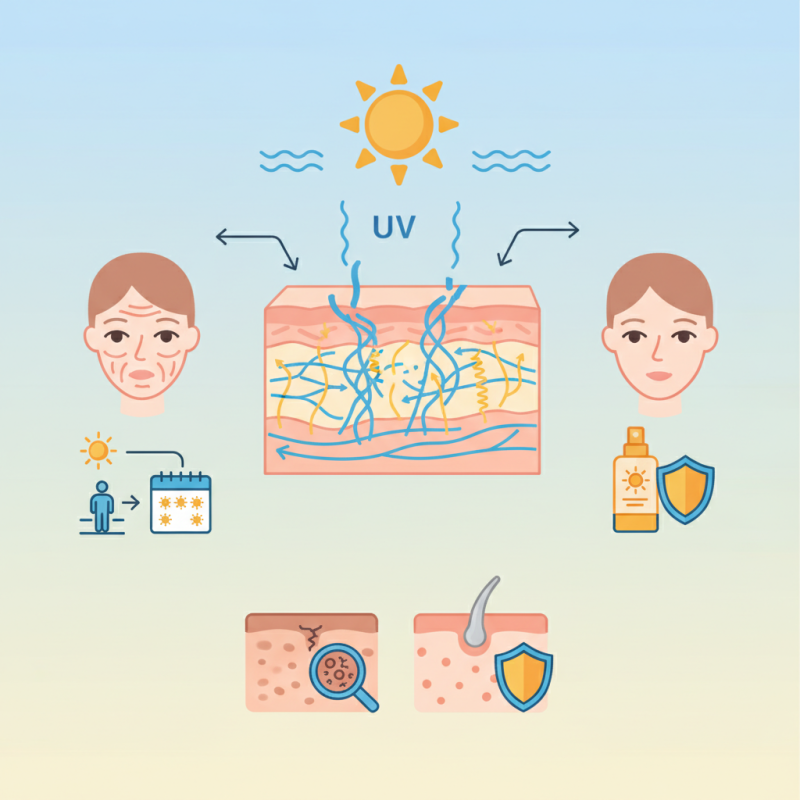
Ultraviolet (UV) radiation plays a significant role in skin aging. When skin is exposed to the sun, UV rays penetrate and damage skin cells. This damage is not superficial; it affects the DNA within these cells. Over time, this could lead to mutations. Changes in the skin's structure become more noticeable. Fine lines and wrinkles may form sooner than expected.
Sun exposure stimulates melanocytes, the cells responsible for pigment production. The skin darkens as a defense mechanism. However, prolonged exposure can result in uneven skin tone and hyperpigmentation. Collagen and elastin fibers also suffer. Sun damage breaks down these proteins, causing loss of elasticity and firmness. It’s fascinating, yet concerning how something as natural as sunlight can harm us.
People often underestimate the power of UV rays. Even on cloudy days, these rays can penetrate the skin. A brief stroll outside can have unseen effects. We often prioritize immediate beauty over long-term damage. Reflecting on one’s habits is crucial. Applying sunscreen should become routine. It's a simple yet effective step to protect delicate skin from aging.
| Skin Damage Mechanism | Description | UV Type | Aging Effect |
|---|---|---|---|
| DNA Damage | UV radiation can cause direct damage to the DNA in skin cells, leading to mutations. | UVA, UVB | Increased risk of skin cancer and accelerated aging. |
| Collagen Degradation | UV radiation induces the production of matrix metalloproteinases (MMPs), which break down collagen. | UVA | Loss of skin elasticity and formation of wrinkles. |
| Inflammation | UV exposure triggers inflammatory responses, leading to a variety of skin issues. | UVA, UVB | Redness, pigmentation, and uneven skin tone. |
| Free Radical Formation | UV exposure generates free radicals that can damage skin cells and accelerate aging processes. | UVA, UVB | Dull skin, fine lines, and age spots. |
| Reduced Skin Barrier Function | UV exposure can weaken the skin barrier, making it more susceptible to moisture loss and environmental damage. | UVA, UVB | Increased dryness, irritation, and sensitivity. |
: UV radiation damages skin cells and affects their DNA, leading to signs of aging like wrinkles.
Sun exposure stimulates pigment-producing cells, causing darkening, uneven tone, and possible hyperpigmentation.
Sunscreen protects against UV damage, helping to prevent fine lines, wrinkles, and long-term skin issues.
Prolonged exposure breaks down collagen and elastin, leading to loss of skin elasticity and firmness.
Moderate sun exposure is beneficial for vitamin D, but excessive exposure can cause serious skin damage.
Individuals with lighter skin types tend to show signs of aging faster than those with darker skin types.
Activities outdoors without protection and exposure to pollution can worsen the effects of sun damage.
Many wish they had been more diligent about sun protection, highlighting the need for better awareness.
Common effects include wrinkles, age spots, and sagging skin from accumulated UV radiation damage.
Regular skin checks and consistent sun protection can significantly reduce skin damage and aging effects.
Exposure to sunlight significantly impacts skin aging, primarily due to the harmful effects of UV radiation on skin cells. This exposure leads to mechanisms of damage that disrupt the skin's structure, particularly the degradation of vital proteins like collagen and elastin, which are essential for maintaining skin elasticity and firmness. Moreover, epidemiological studies have consistently shown a link between prolonged sun exposure and accelerated aging, indicating that cumulative UV exposure contributes to noticeable skin changes.
To combat these aging effects, protective strategies such as the use of sunscreens have been developed, which are effective in mitigating the damaging impact of UV rays. Over time, clinical observations reveal that these long-term skin changes are influenced by age-related factors, underscoring the importance of understanding why does sun exposure affect skin aging. By adopting preventive measures, individuals can significantly reduce the visible signs of photoaging and maintain healthier skin as they age.

 AJD Skincare